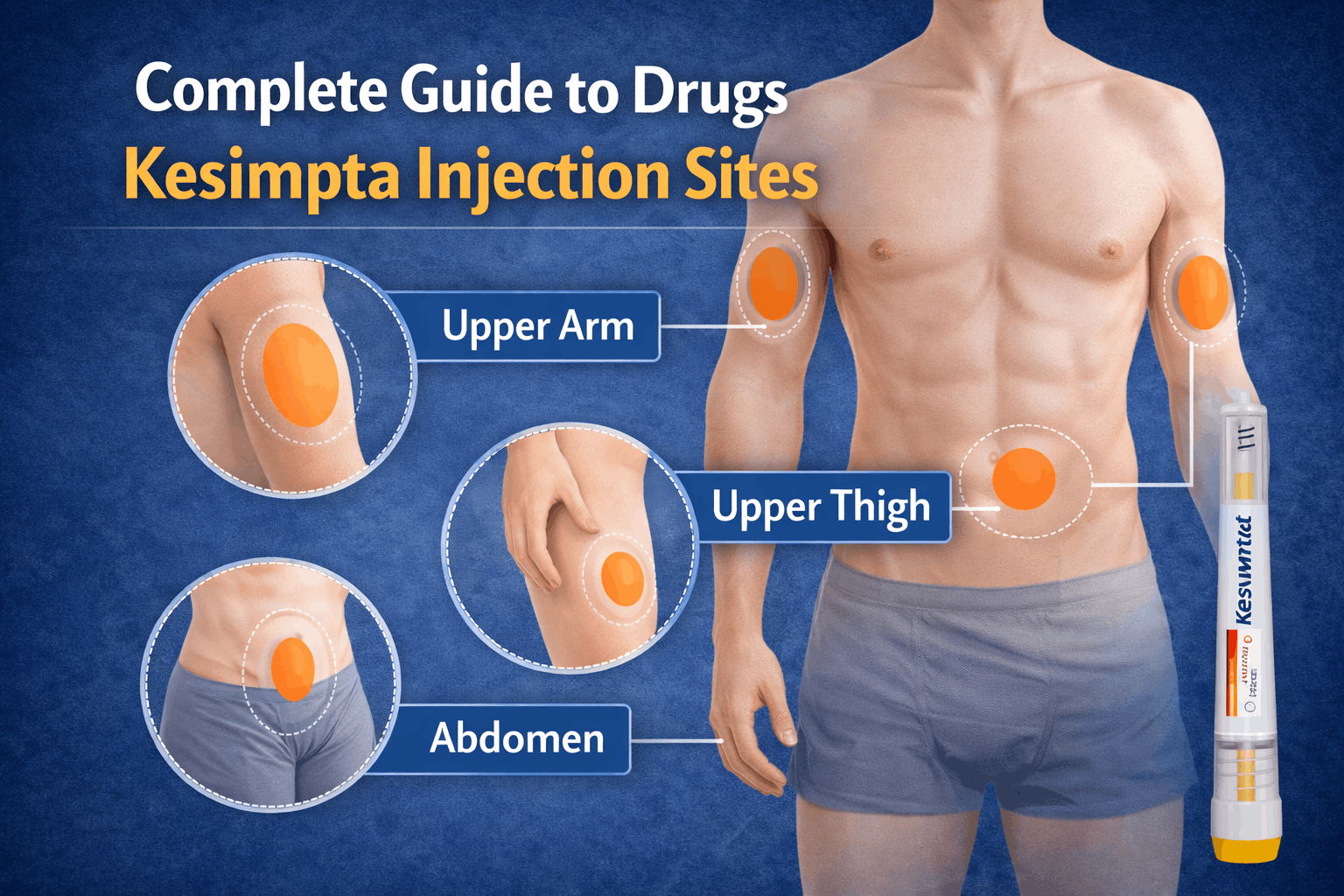
Complete Guide to Drugs Kesimpta Injection Sites
Understanding proper drugs kesimpta injection sites is crucial for patients prescribed this medication for multiple sclerosis treatment. Kesimpta (ofatumumab) is a self-administered subcutaneous injection that requires careful attention to injection site selection, rotation, and technique to ensure optimal therapeutic outcomes and minimize adverse reactions.
This comprehensive guide provides healthcare professionals and patients with essential information about proper injection site management, safety protocols, and best practices for Kesimpta administration. Whether you’re a healthcare provider educating patients or an individual learning self-injection techniques, this resource covers everything you need to know about drugs kesimpta injection sites.
Proper injection site management not only improves medication efficacy but also reduces the risk of complications such as injection site reactions, infection, and tissue damage. By following evidence-based guidelines and maintaining consistent practices, patients can achieve better treatment outcomes while maintaining quality of life during their multiple sclerosis therapy journey.
Understanding Drugs Kesimpta Injection Sites Fundamentals
Kesimpta injection sites require careful consideration due to the medication’s subcutaneous administration route. The drug is designed for self-injection using a pre-filled pen device, making proper site selection and preparation essential for treatment success.
Primary Injection Site Locations
The approved drugs kesimpta injection sites include three primary anatomical areas:
- Thigh: Front and outer aspects, avoiding the inner thigh and knee area
- Abdomen: At least 2 inches away from the navel, avoiding the waistline
- Upper arm: Outer area, typically administered by a caregiver or healthcare provider
Each location offers distinct advantages and considerations. The thigh provides easy access for self-administration and has adequate subcutaneous tissue for proper drug absorption. The abdomen offers excellent absorption rates due to rich blood supply, while the upper arm may be preferred for patients with limited mobility in other areas.
Injection Site Anatomy Considerations
Understanding the anatomical structure of injection sites helps ensure proper medication delivery. The subcutaneous layer, located between the skin and muscle, contains the optimal tissue density for Kesimpta absorption. This layer varies in thickness across different body regions, influencing injection technique and needle penetration depth.
The subcutaneous tissue’s rich vascular network facilitates drug absorption while providing a buffer zone that reduces the risk of intramuscular injection. Proper site selection considers factors such as tissue thickness, blood supply, nerve distribution, and accessibility for self-administration.
Best Practices for Drugs Kesimpta Injection Sites Selection
Implementing systematic approaches to drugs kesimpta injection sites selection ensures consistent treatment outcomes and minimizes complications. Healthcare providers should educate patients on evidence-based selection criteria and rotation strategies.
Site Rotation Strategy
Effective site rotation prevents tissue damage and maintains absorption consistency. A structured rotation plan should include:
- Dividing each anatomical area into multiple injection points
- Maintaining at least 1-2 inches between consecutive injection sites
- Avoiding previously used sites for at least 1-2 weeks
- Creating a visual tracking system or log to monitor rotation
- Inspecting sites regularly for signs of irritation or complications
The systematic rotation approach distributes injection trauma across multiple sites, allowing adequate healing time and maintaining tissue integrity. This strategy is particularly important for long-term Kesimpta therapy, where patients may require injections for extended periods.
Site Assessment and Preparation
Before each injection, thorough site assessment ensures optimal conditions for drug administration. Key assessment criteria include:
- Skin integrity and absence of wounds, bruises, or irritation
- Adequate subcutaneous tissue thickness
- Normal skin temperature and color
- Absence of scar tissue or areas of previous reactions
- Accessibility for proper injection technique
Proper preparation involves cleaning the injection site with an alcohol swab, allowing complete drying, and ensuring all injection materials are at room temperature. These steps minimize infection risk and optimize drug stability during administration.
Step-by-Step Drugs Kesimpta Injection Sites Tutorial
This comprehensive drugs kesimpta injection sites tutorial provides detailed instructions for safe and effective medication administration. Following standardized procedures ensures consistent technique and reduces the risk of complications.
Pre-Injection Preparation
Successful injection begins with thorough preparation:
- Hand hygiene: Wash hands thoroughly with soap and water or use alcohol-based sanitizer
- Supply gathering: Collect Kesimpta pen, alcohol swabs, cotton balls, and disposal container
- Medication inspection: Check expiration date and examine solution for clarity and particles
- Temperature adjustment: Allow refrigerated medication to reach room temperature (15-30 minutes)
- Site selection: Choose injection site according to rotation schedule
Preparation also includes reviewing injection instructions, checking for any changes in the patient’s condition that might affect injection site selection, and ensuring a comfortable, well-lit environment for the procedure.
Injection Technique Protocol
The standardized injection technique for drugs kesimpta injection sites follows these critical steps:
- Site cleaning: Clean selected area with alcohol swab in circular motion, allow to dry
- Skin preparation: Gently pinch skin to create a fold for subcutaneous access
- Needle insertion: Insert pen at 90-degree angle with firm, quick motion
- Drug delivery: Press injection button and hold pen in place for complete dose delivery
- Withdrawal: Remove pen straight out and apply gentle pressure with cotton ball
- Disposal: Immediately dispose of pen in sharps container
Maintaining consistent technique across all injection sites ensures reliable drug delivery and minimizes patient discomfort. The 90-degree angle is crucial for reaching the subcutaneous layer without penetrating muscle tissue.
Common Drugs Kesimpta Injection Sites Examples and Scenarios
Real-world drugs kesimpta injection sites examples help patients and healthcare providers understand practical application of injection guidelines. These scenarios address common situations and provide problem-solving strategies.
Scenario-Based Site Selection
Different patient circumstances require adapted approaches to injection site management:
| Patient Scenario | Recommended Sites | Special Considerations | Modifications |
|---|---|---|---|
| Limited mobility | Abdomen, accessible thigh areas | May require caregiver assistance | Extended reach tools, caregiver training |
| Obesity | Areas with adequate subcutaneous tissue | Ensure proper needle depth | Longer needle length, tissue assessment |
| Very thin patients | Areas with sufficient tissue padding | Avoid intramuscular injection | Gentle pinch technique, angle adjustment |
| Previous reactions | Alternative anatomical areas | Document reaction patterns | Extended rotation schedule, site avoidance |
These scenarios demonstrate the importance of individualized injection site strategies based on patient-specific factors. Healthcare providers should assess each patient’s unique circumstances and develop customized injection plans that optimize treatment outcomes while maintaining safety standards.
Troubleshooting Common Issues
Addressing frequent challenges in injection site management improves patient compliance and treatment success:
- Site reactions: Rotate to different anatomical areas, apply cold compress, monitor for improvement
- Bleeding: Apply direct pressure, ensure proper needle angle, check for blood thinning medications
- Pain or discomfort: Allow medication to reach room temperature, use proper injection speed
- Difficulty accessing sites: Consider caregiver assistance or adaptive equipment
- Scar tissue formation: Expand rotation pattern, avoid affected areas permanently
Early identification and management of these issues prevent complications and maintain treatment continuity. Patients should be educated to recognize normal versus abnormal injection site responses and when to contact healthcare providers.
Safety Guidelines for Drugs Kesimpta Injection Sites
Implementing comprehensive safety protocols protects patients from complications and ensures optimal therapeutic outcomes. These guidelines address infection prevention, complication recognition, and emergency procedures.
Infection Prevention Strategies
Maintaining sterile technique throughout the injection process minimizes infection risk:
- Aseptic technique: Use sterile supplies, avoid touching needle, maintain clean work surface
- Proper storage: Maintain cold chain, protect from light, check expiration dates
- Site care: Keep injection sites clean and dry, avoid touching or rubbing
- Equipment disposal: Use designated sharps containers, never reuse injection devices
- Environmental controls: Perform injections in clean, well-lit areas away from contaminants
These infection prevention measures are particularly important for patients with compromised immune systems, as multiple sclerosis treatments can increase infection susceptibility. Regular reinforcement of these practices maintains patient safety throughout treatment duration.
Complication Recognition and Management
Early recognition of injection site complications enables prompt intervention and prevents serious adverse events. Healthcare providers should educate patients about warning signs and appropriate responses:
- Immediate reactions: Severe pain, excessive bleeding, immediate swelling
- Delayed reactions: Persistent redness, warmth, hardness, or drainage after 24-48 hours
- Systemic symptoms: Fever, chills, widespread rash, or difficulty breathing
- Injection site infections: Purulent drainage, red streaking, or increasing pain
Patients should maintain injection site documentation, including photos when appropriate, to track patterns and facilitate healthcare provider assessment. This information proves valuable for adjusting injection techniques and identifying potential complications early.
Advanced Tips for Optimizing Drugs Kesimpta Injection Sites
Expert strategies and advanced techniques help patients achieve optimal results with drugs kesimpta injection sites management. These evidence-based approaches address complex scenarios and long-term treatment considerations.
Personalized Injection Schedules
Developing individualized injection schedules optimizes treatment adherence and outcomes:
- Consider patient lifestyle factors and daily routines
- Accommodate work schedules and travel requirements
- Integrate with existing medication regimens
- Plan around potential side effect timing
- Maintain consistent injection intervals as prescribed
Personalized scheduling improves patient compliance and reduces missed doses, which can compromise treatment efficacy. Healthcare providers should work collaboratively with patients to develop sustainable injection routines that fit individual circumstances.
Technology Integration and Tracking
Modern technology tools enhance injection site management and treatment monitoring:
- Mobile applications: Track injection sites, set reminders, document reactions
- Digital photography: Monitor injection site healing and document changes
- Electronic health records: Maintain comprehensive injection history and outcomes
- Patient portals: Facilitate communication with healthcare providers
- Wearable devices: Monitor physiological responses to injections
Technology integration provides objective data for treatment optimization and enables proactive management of potential complications. These tools also empower patients to take active roles in their treatment management.
Long-term Management of Drugs Kesimpta Injection Sites
Sustained success with Kesimpta therapy requires comprehensive long-term management strategies for injection sites. This approach addresses tissue health preservation, adaptation to changing patient needs, and continuous quality improvement.
Tissue Health Preservation
Long-term injection site health depends on proactive tissue care and monitoring:
- Skin care regimens: Maintain adequate hydration, use gentle cleansers, protect from environmental damage
- Tissue massage: Gentle massage between injections promotes circulation and prevents induration
- Nutritional support: Adequate protein intake supports tissue repair and healing
- Exercise considerations: Maintain muscle tone and circulation in injection areas
- Regular assessments: Schedule periodic evaluations with healthcare providers
These preservation strategies become increasingly important with extended treatment duration, as cumulative injection effects can compromise tissue integrity over time. Proactive management prevents complications that could limit injection site options.
Adaptation Strategies
Treatment plans must evolve with changing patient circumstances and needs:
- Regular review of injection site rotation effectiveness
- Assessment of changing anatomical considerations
- Adaptation to new medical conditions or medications
- Modification of techniques based on patient feedback
- Integration of emerging best practices and technologies
Flexibility in injection site management ensures continued treatment success despite evolving patient circumstances. Regular reassessment and plan modification maintain optimal therapeutic outcomes throughout the treatment journey.
Training and Education Resources
Comprehensive education programs ensure proper implementation of drugs kesimpta injection sites protocols. These resources support both healthcare providers and patients in developing competency and confidence in injection management.
Healthcare Provider Training Programs
Professional education programs equip healthcare providers with essential knowledge and skills:
- Injection technique demonstration and practice
- Patient assessment and site selection criteria
- Complication recognition and management protocols
- Patient education methodologies and materials
- Quality assurance and continuous improvement processes
Ongoing professional development ensures healthcare providers maintain current knowledge of best practices and emerging research in injection site management. Regular training updates address new findings and technique refinements.
Patient Education Materials
Effective patient education resources support self-management and improve treatment outcomes:
- Visual guides: Step-by-step illustration of proper injection technique
- Video demonstrations: Real-time examples of correct procedures
- Interactive tools: Online modules and assessment quizzes
- Support groups: Peer learning and experience sharing opportunities
- Reference materials: Quick guides and troubleshooting resources
Multi-modal education approaches accommodate different learning styles and preferences, improving knowledge retention and practical application. Regular reinforcement through various channels maintains competency over time.
Conclusion
Mastering drugs kesimpta injection sites management is essential for successful multiple sclerosis treatment outcomes. This comprehensive guide has covered fundamental principles, best practices, safety protocols, and advanced strategies that support optimal therapeutic results while minimizing complications.
Key takeaways include the importance of proper site selection and rotation, adherence to sterile technique, recognition of potential complications, and adaptation of strategies to individual patient needs. Long-term success depends on consistent application of evidence-based practices, ongoing education, and proactive management of injection site health.
Healthcare providers and patients must work collaboratively to implement these guidelines effectively. Regular assessment, continuous education, and adaptation to emerging best practices ensure sustained treatment success and improved quality of life for individuals with multiple sclerosis.
Take action today by reviewing your current injection site management practices and implementing the strategies outlined in this guide. Consult with your healthcare provider to develop a personalized injection plan that optimizes your Kesimpta therapy outcomes while maintaining the highest safety standards.
Frequently Asked Questions
What are the approved injection sites for Kesimpta?
The approved injection sites for Kesimpta include the front and outer aspects of the thigh (avoiding inner thigh and knee area), the abdomen (at least 2 inches from the navel), and the outer area of the upper arm (typically administered by a caregiver). These sites provide adequate subcutaneous tissue for proper drug absorption while minimizing discomfort and complications.
How often should I rotate Kesimpta injection sites?
Injection sites should be rotated with each administration, maintaining at least 1-2 inches between consecutive injection points. Avoid using the same site for at least 1-2 weeks to allow proper tissue healing. Create a systematic rotation schedule across all approved anatomical areas to distribute injection trauma and maintain tissue integrity throughout long-term treatment.
What should I do if I experience injection site reactions?
Mild injection site reactions such as redness, swelling, or tenderness are common and typically resolve within a few days. Apply a cold compress, avoid rubbing the area, and rotate to a different injection site for the next dose. Contact your healthcare provider if reactions persist beyond 48 hours, worsen, or if you develop signs of infection such as purulent drainage, red streaking, or fever.
Can I inject Kesimpta in the same anatomical area consecutively?
While you can use the same anatomical area (such as the thigh) for consecutive injections, you must select different injection points within that area, maintaining adequate spacing between sites. However, it’s recommended to rotate between different anatomical areas (thigh, abdomen, upper arm) to optimize absorption and minimize local tissue effects from repeated injections.
How do I prepare an injection site properly?
Proper injection site preparation involves washing your hands thoroughly, selecting an appropriate injection site according to your rotation schedule, cleaning the area with an alcohol swab using circular motions from center outward, and allowing the area to dry completely. Ensure the medication is at room temperature and inspect the injection site for any signs of irritation, wounds, or previous reaction before proceeding with injection.
What factors should influence my injection site selection?
Injection site selection should consider several factors including adequate subcutaneous tissue thickness, absence of skin irritation or previous reactions, accessibility for self-administration, rotation schedule adherence, and individual anatomical considerations. Patients with limited mobility, obesity, or very thin body habitus may require modified site selection strategies. Always avoid areas with wounds, bruises, scars, or signs of infection.