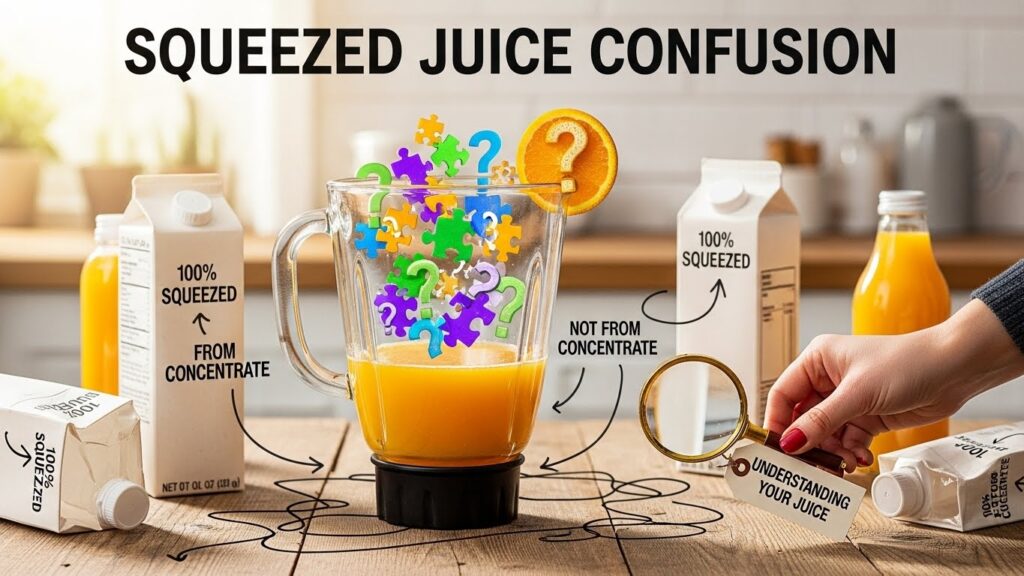
The "Squeezed" Confusion: Why It Matters
Most consumers share a common pain point: Trust. When you see the word “Squeezed” on a carton, you visualize a farmer taking an orange or an apple, crushing it by hand, and bottling the liquid immediately.
However, the industrial reality is far different. Many consumers are shocked to learn that juice labeled as “100% Squeezed” might have sat in a vat for months before reaching the shelf. Understanding the terminology is the only way to ensure you are getting the nutrients you pay for.
Common Questions We Will Answer:
What is the difference between “Fresh Squeezed” and just “Squeezed”?
Is “Not From Concentrate” actually better?
Does pasteurization kill the nutrients in squeezed juice?
Is squeezing your own juice worth the effort?
1. Defining the Term: What is "Squeezed" Juice?
In the world of juice manufacturing, the word squeezed is used to differentiate the product from “reconstituted” juice.
Freshly Squeezed (The Gold Standard)
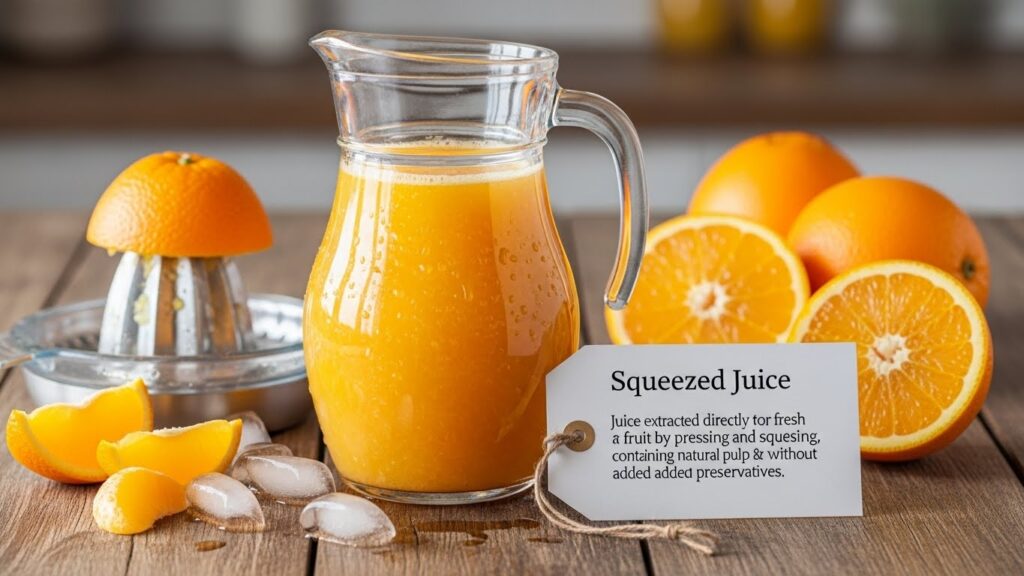
If a label says “Freshly Squeezed,” it typically means the fruit was pressed, and the juice was bottled without any major processing (like high-heat pasteurization).
Shelf Life: Very short (usually a few days).
Taste: Exactly like the fruit.
Nutrients: High retention of Vitamin C and enzymes.
“Squeezed” or “100% Squeezed” (The Store Shelf Standard)
When you see a commercial carton labeled simply “Squeezed,” it usually refers to Not From Concentrate (NFC) juice. This means the fruit was squeezed, the pulp and oils were removed (and later added back in precise amounts), and the juice was pasteurized.
The Catch: To make it available year-round, manufacturers often de-aerate the juice (remove oxygen) and store it in massive tanks for up to a year. This process strips flavor, which is why “flavor packs” (derived from the fruit oils) are added back before bottling to make it taste fresh again.
Key Takeaway: Just because it says “Squeezed” doesn’t mean it was squeezed today. It means it wasn’t reduced to a powder or syrup first.
2. Squeezed vs. From Concentrate: The Battle of the Cartons
This is where most shoppers get stuck. Is the extra $2 or $3 for “Squeezed” juice worth it compared to the frozen brick of concentrate?
Juice From Concentrate
This involves squeezing the fruit, boiling off the water to create a thick syrup (concentrate), freezing it for transport, and then adding water back later.
Pros: Cheaper, longer shelf life.
Cons: The heating process destroys delicate enzymes and vitamins. The flavor is often “cooked” or flat.
Squeezed (Not From Concentrate)
This juice is pressed and pasteurized but never reduced to a syrup.
The Verdict: While squeezed NFC juice is marginally better than concentrate, it is not the health elixir many assume it to be. Both are often high in fructose (fruit sugar) without the fiber of the whole fruit.
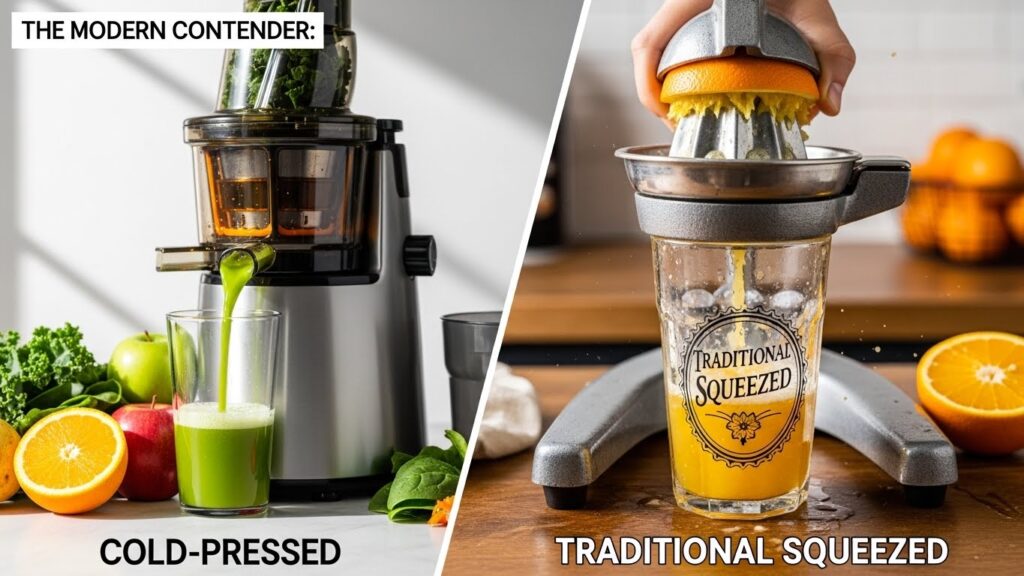
3. The Modern Contender: Cold-Pressed vs. Traditional Squeezed
If you are looking for maximum health benefits, standard “squeezed” grocery store juice might disappoint you. Enter the trend of Cold-Pressed juice.
Traditional Squeezed (Centrifugal)
Most home juicers and standard industrial machines use fast-spinning blades.
Cold-Pressed (Hydraulic)
This method uses a hydraulic press to slowly crush the fruit and extract the liquid. No heat is generated.
The Benefit: It retains significantly more vitamins, minerals, and live enzymes.
The Cost: It is much more expensive and expires quickly unless treated with HPP (High-Pressure Processing).
If your goal is a juice cleanse or boosting immunity, “Cold-Pressed” is superior to standard “Squeezed” or “From Concentrate” options.
4. The Hidden Trap: "Squeezed" and Sugar Content
A major pain point for health-conscious visitors is weight management. Many people switch from soda to squeezed orange juice thinking it is a diet-friendly move.
Here is the harsh reality: A 12oz glass of squeezed orange juice can contain as much sugar as a can of soda (roughly 9 teaspoons).
When you squeeze fruit, you discard the fiber. Fiber is what slows down the absorption of sugar into your bloodstream. Without it, squeezed juice causes a rapid spike in blood sugar, followed by a crash.
How to Drink “Squeezed” Juice Safely:
Portion Control: Stick to small glasses (4-6 oz).
Pair with Protein: Drink it alongside eggs or nuts to blunt the sugar spike.
Choose Veggies: Opt for “Squeezed” green juices (celery, kale, cucumber) with a splash of fruit for flavor, rather than 100% fruit juice.
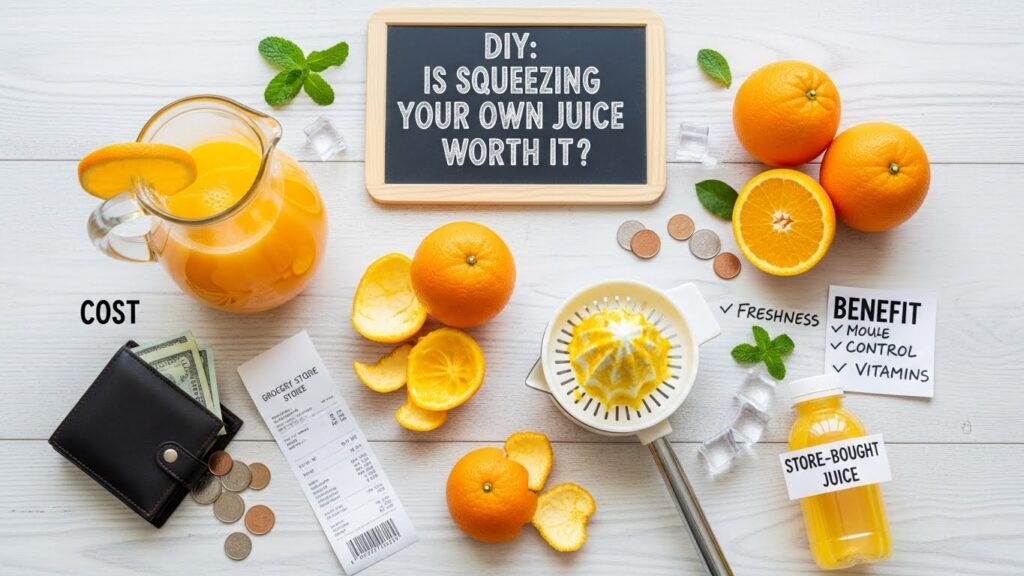
5. DIY: Is Squeezing Your Own Juice Worth It?
Is the hassle of buying, washing, and squeezing fruit manually worth it?
Yes, and here is why.
When you drink freshly squeezed juice immediately after making it:
Enzyme Activity: You get live enzymes that aid digestion. These die within hours of oxidation.
No Additives: You know exactly what is in it—no hidden preservatives, flavor packs, or added sugar.
Taste: The flavor of an orange squeezed 30 seconds ago is vastly superior to one squeezed 6 months ago and stored in a tank.
Pain Point Solution: If you don’t have time every morning, consider batch prepping “squeezed” juice for 2-3 days using a slow juicer (masticating juicer) and storing it in airtight glass jars filled to the brim to prevent oxidation.
How to Read the Label Like a Pro
Next time you are in the store, look for these specific keywords to know exactly what kind of squeezed product you are buying.
| Label Term | What It Really Means |
| Freshly Squeezed | Unpasteurized, raw, shelf life of days. Best quality. |
| Not From Concentrate (NFC) | Pasteurized, likely stored in tanks. Good, but processed. |
| 100% Juice | Can be a mix of concentrate and water. Check ingredients. |
| Juice Drink / Cocktail | Mostly sugar water with a tiny percentage of squeezed juice. Avoid. |
| Cold-Pressed | Hydraulic extraction, higher nutrient density. |
So, what does squeezed juice really mean?
In the commercial world, it is often a marketing term used to sell pasteurized juice that is a step up from concentrate, but a step down from fresh fruit. It offers convenience and consistency, but often at the cost of fresh enzymes and honest flavor.
If you want the true health benefits associated with the word “squeezed,” you have two best options:
Squeeze it yourself at home.
Buy Cold-Pressed juices that haven’t been heat-pasteurized.
Don’t let the marketing on the front of the carton fool you. Turn it around, read the ingredients, and understand the process. Your health is worth the extra minute of investigation.
Frequently Asked Questions (FAQ)